

Artist Statement:
Each negative is swept with an electronic dust collector to ensure all dust is removed from the negative.
All 35mm film is enlarged using my Leica V35 enlarger with a Leitz Wetzlar 40mm Focotar enlarging lens, and a Heiland LED Light Source and probe to analyze the negative’s highlights and shadows for the Ilford Multigrade Fiber paper I use. This first print gets me “into the ballpark” to make the final archival silver print.
All 6x6 (2.25 x 2.25) and 4x5 films are printed using my 1968 5x7 Durst 138s Laborator with an El Nikkor 135mm enlarging lens, and a El Nikkor 150mm enlarging lens, respectively, and a Heiland LED Light Source and probe to analyze the negative’s highlights and shadows.
Depending on the negative and its densities, I will also opt to use a mask system, conceived by my dear friend, Alan Ross, to help bring down highlights and to open shadows.
All 8x10 negatives are contact prints under the Durst 138s Laborator. If an 8x10 negative is enlarged, it is made using my Zone VI 8x10 enlarger with a Zone VI Cold Light Head and a 240mm Schneider enlarging lens. Depending on the negative’s densities, I will incorporate Alan’s mask system.
These three enlargers work beautifully with the Ilford Multigrade Fiber paper.
This series of prints will be made with Ilford Multigrade Fiber paper, processed in Ilford developer for two-minutes at 68-degrees, a stop bath of one minute, a fix bath of two minutes,* then washed in an archival washer for ten minutes.**
These prints are made from Kodak Tri-X negatives, developed in Kodak D-76, full strength with Crone C added to the stock developer. This C-76 developer produces open shadows and transparent highlights.
Each photograph will be mounted and matted on 100 percent museum rag mat boards. Each will be signed by me accompanied with a USB drive that shows me making your print.
*It has been determined that a fix bath of two minutes is efficient to give each print archival permanence.
**A ten-minute wash in my archival washers guarantees each print archival permanence.
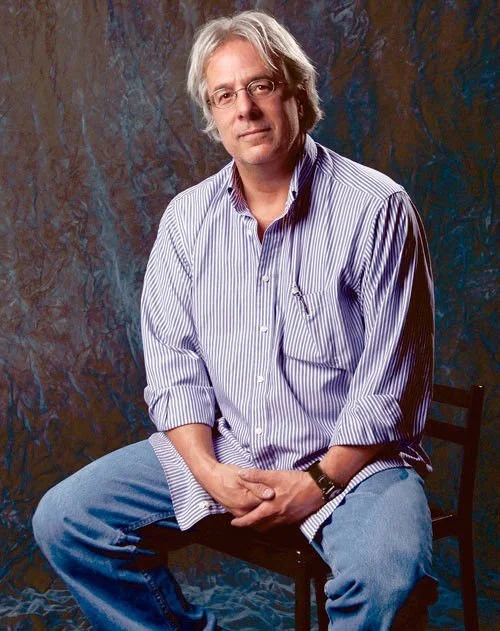
Kenn Bisio (He/Him)
Kenn Bisio is a world-renowned photojournalist with over 40 years of professional experience.
His photographs have been published in the world’s most popular and prestigious newspapers and magazines that include Sports Illustrated, National Geographic, Die Zeit, Le Monde, New York Times, Newsweek, U. S. News & World Report and Time International. Bisio received numerous awards for his photographs, which have been displayed at exhibits in America, Europe, Russia and the Far East. His photographs have also been purchased by individuals, corporate companies, museums and gallery collectors.
He is Professor and Chair Emeritus, Photojournalism and Social Documentary, at Metropolitan State University of Denver where he held, simultaneously, the chair positions of the Department of Journalism and Mass Communication (1995- 2006) and the Department of Communication Arts and Sciences (2002-2006). Bisio was bestowed the Educator of the Year award by the Society of Professional Journalists in 2015. His research interests include new media, convergent media, the role of newspapers and Wall Street investors, published manipulated photographs, Instagram vs Photojournalism, historical and contemporary photographers, film photography as the foundation to digital capture, previsualization as it applies to film and two-dimensional prints, and the zeros and ones of digital photography.
Bisio received his Master’s Degree of Fine Arts-V from Norwich University in Vermont, and Bachelor’s Degrees in Journalism (Reporting), Photojournalism and Political Science from San Jose State University in California.